Introducing Human-Centered Design to Healthcare Professionals
How might we re-design and implement human-centered methods to support use in a healthcare environment?

Working with Cincinnati Children’s Hospital and Medical Center.
Live Well Collaborative has been a partner of Cincinnati Children’s Hospital and Medical Center (CCHMC) for 12+ years. I have lead or co-lead 4 projects with this client and have built lasting relationships with stakeholders within this organization.
Long term clients; balancing asks and deliverables
Our team balanced different simultaneous asks from the client. Alongside our initial ask, during the course of the semester we managed many pop-up initiatives including the development of patient-facing materials for an internal start-up program.
01
Working with Client to identify need for education of nurses and faculty in CCHMC.
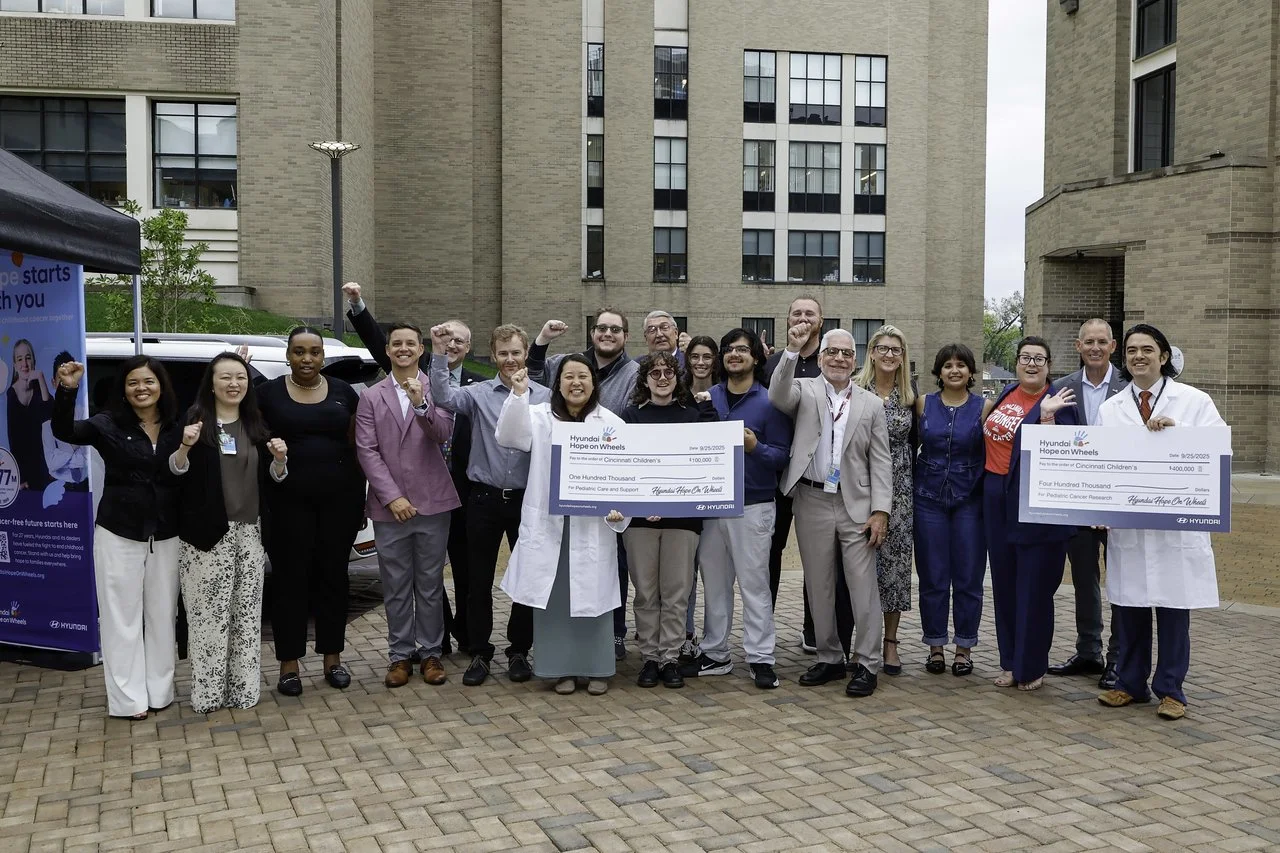
Adaptive tools sparked a long-term internal culture shift within CCHMC.
02
Development of human-centered educational materials; testing with teams and clients.
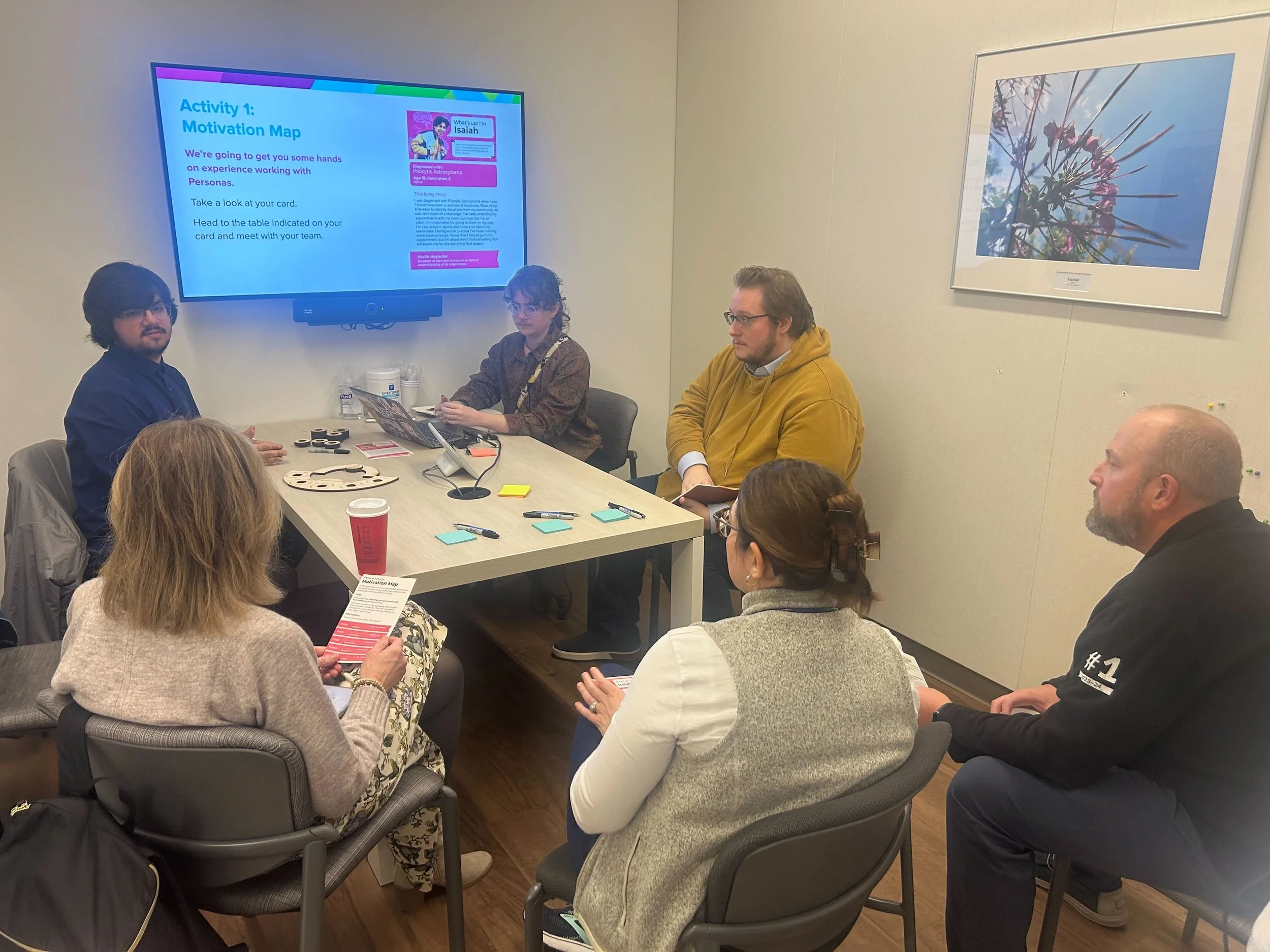
Our team researched, designed and piloted a Human-Centered Design (HCD) training module intended to enable utilization of human-centered processes by healthcare professionals in the Cincinnati Children’s Cancer and Blood Diseases Institute (CBDI).
These tools were condensed into a manageable, 1-hour workshop intended to be conducted at CBDI’s faculty meetings. They utilized tangible and mental models to communicate HCD methods in a way that were useable by staff and faculty.
03
Pilot workshop and strategic implementation plan, geared towards long-term culture shift.
01
Working with Client to identify need for education of nurses and faculty in CCHMC.
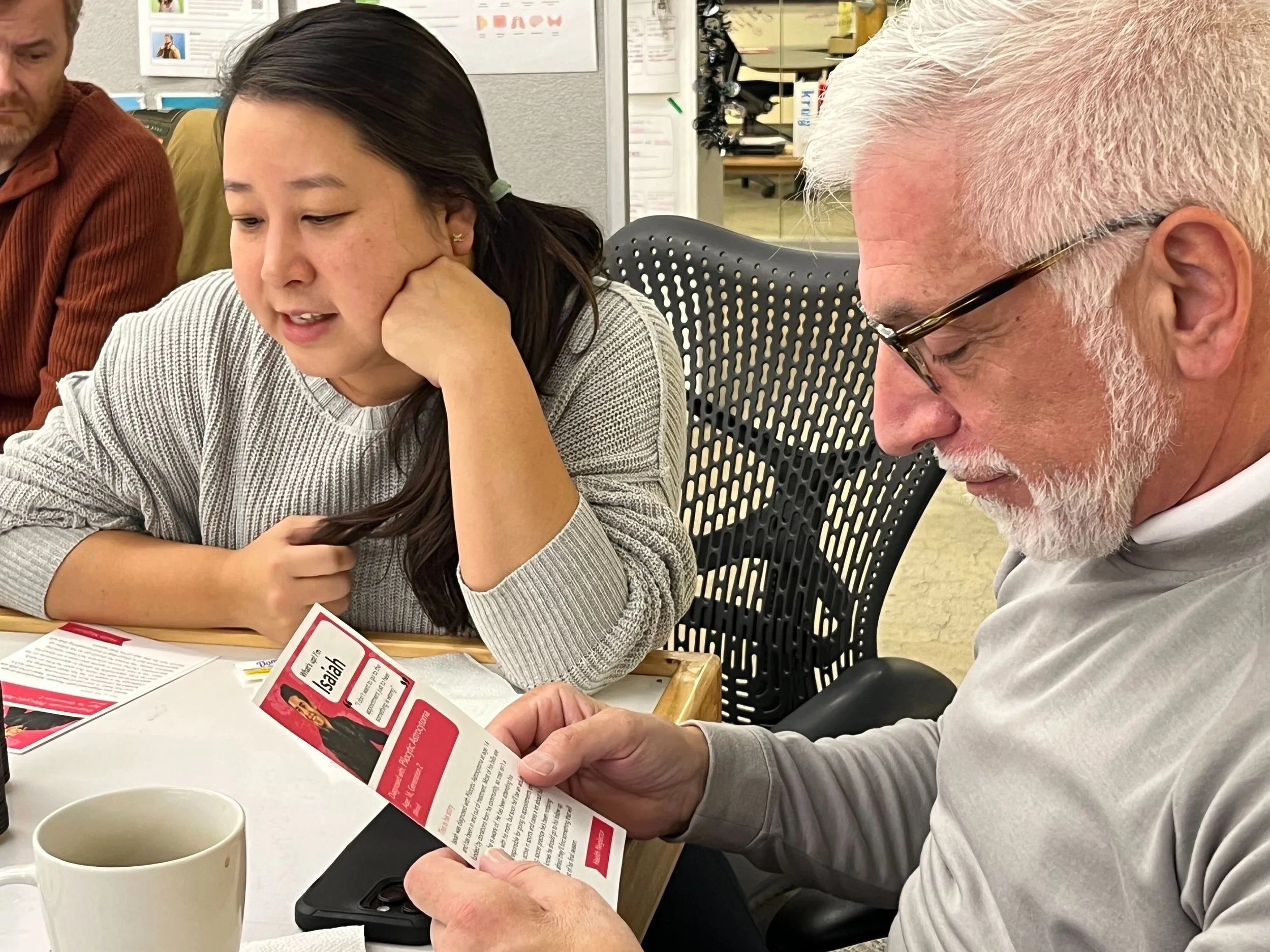
Our client wanted to begin a culture shift within their department towards human-centered design (HCD), and educate all staff in HCD training.
We worked with faculty to deeply understand the nature of our stakeholders’ jobs. Over the course of the semester we conducted 8+ conversational interviews with 4 oncologists, 3 nurse practitioners and a social worker operating within CBDI.
We built these learnings into our process when developing materials: for example, the educational activities would need to be quick, to the point and engaging in order to land with healthcare professionals in the middle of their day.
02
Development of human-centered educational materials; testing with teams and clients.
Human-Centered Design Introduction
Developed a short, 20-minute introduction so our audience could fully understand human-centered design methodologies and where they came from.
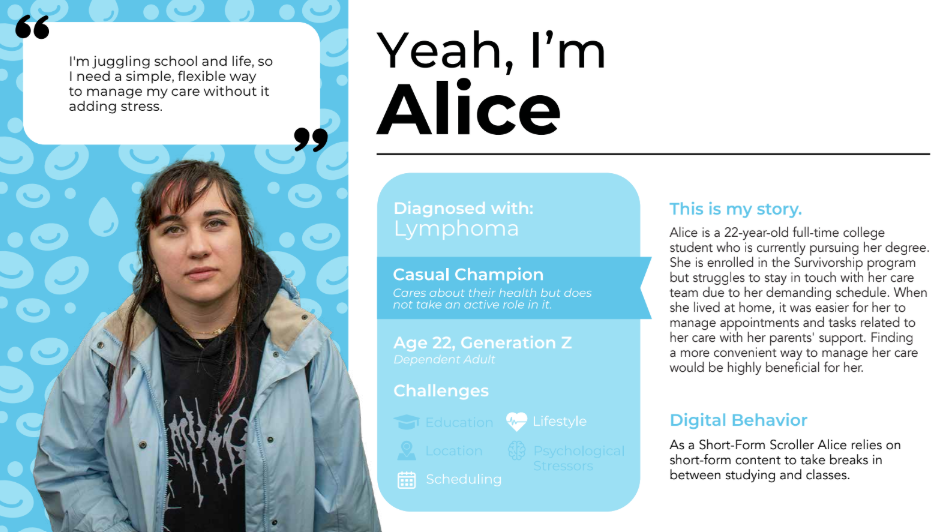
Adaptive Persona Design
Development of adaptive personas based on a comprehensive review of secondary sources, both internal and external, allowed practitioners to relate to their patients in a new way. This high-level, condensed overview of personas with a glimpse into their long-term care journey resonated with healthcare practitioners, who are pressed for time and rarely are able to step back and see the bigger picture.
Persona River of Choices
Personas were then translated into a journey map, which identified key inflection points and how their lives were influenced by their map. Importantly, this map was used to facilitate group conversations and inspire empathy for real patients.
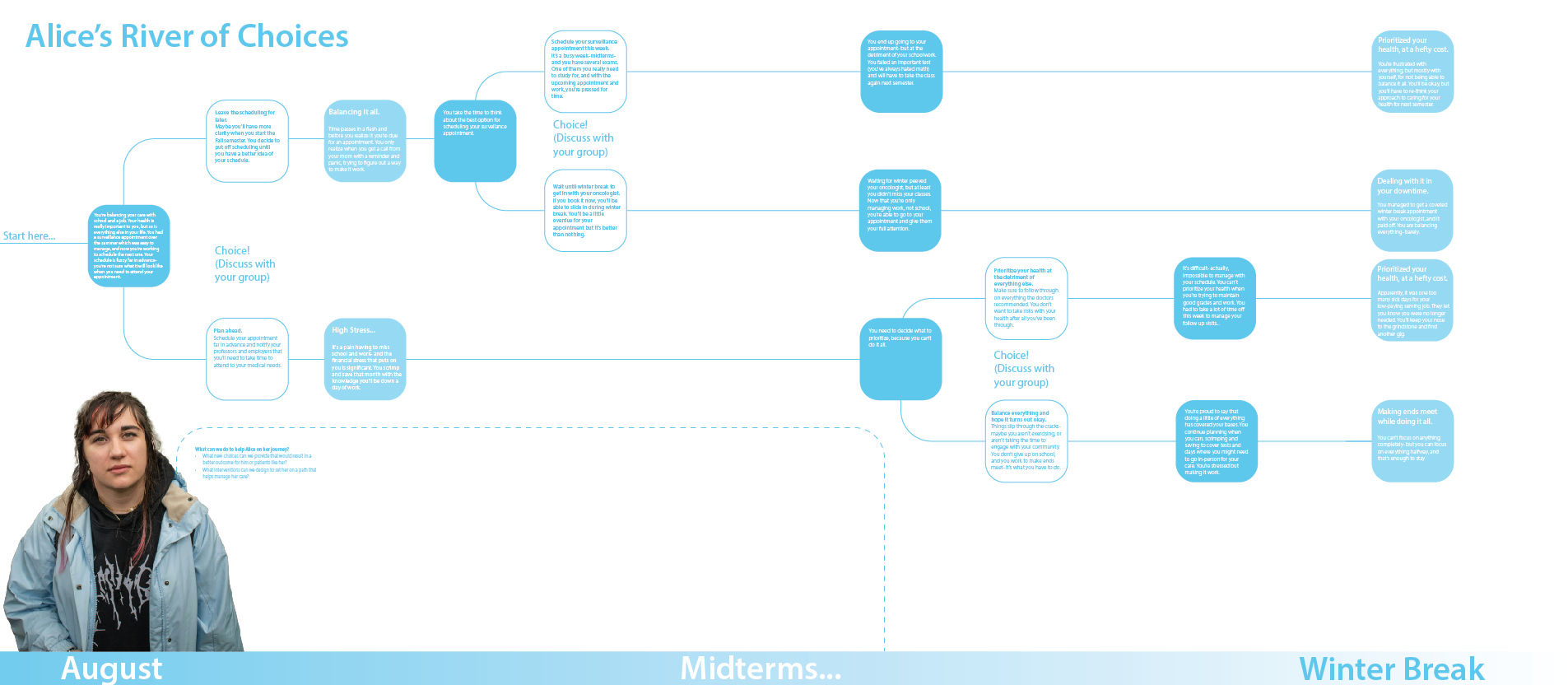
DEVELOPMENT OF HUMAN-CENTERED EDUCATIONAL MATERIALS
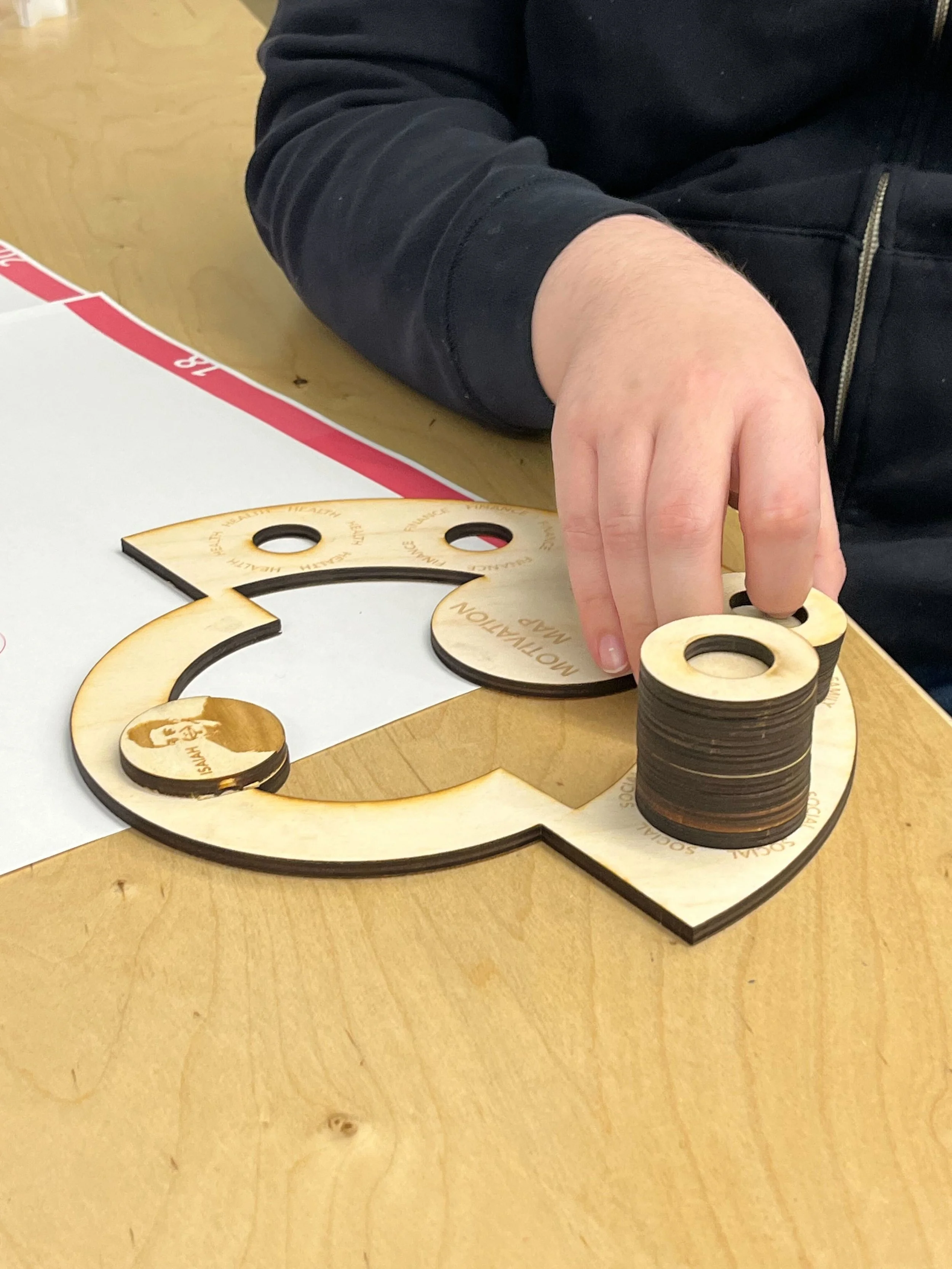
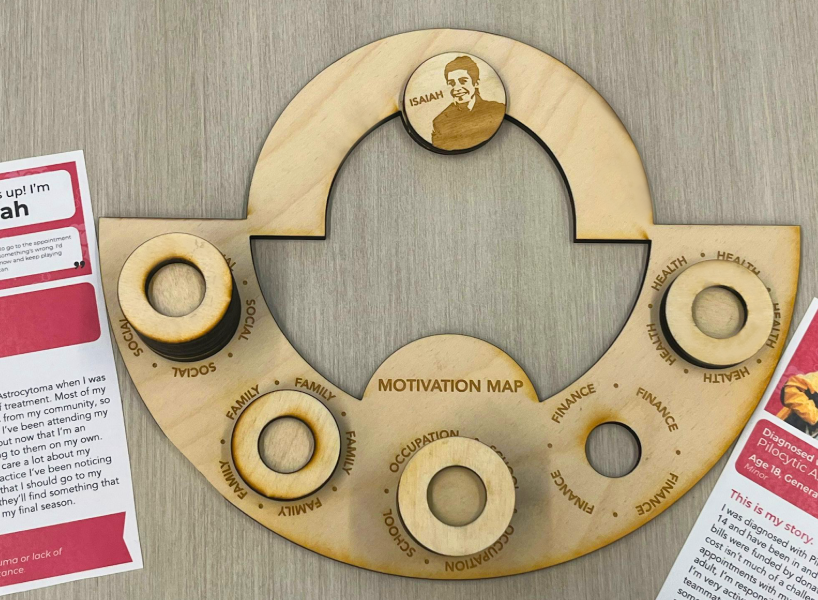
Tactile Motivation map
This activity enabled clinicians to understand and visually see each persona’s motivations and how they relate to their healthcare practices.
Workshop Components:
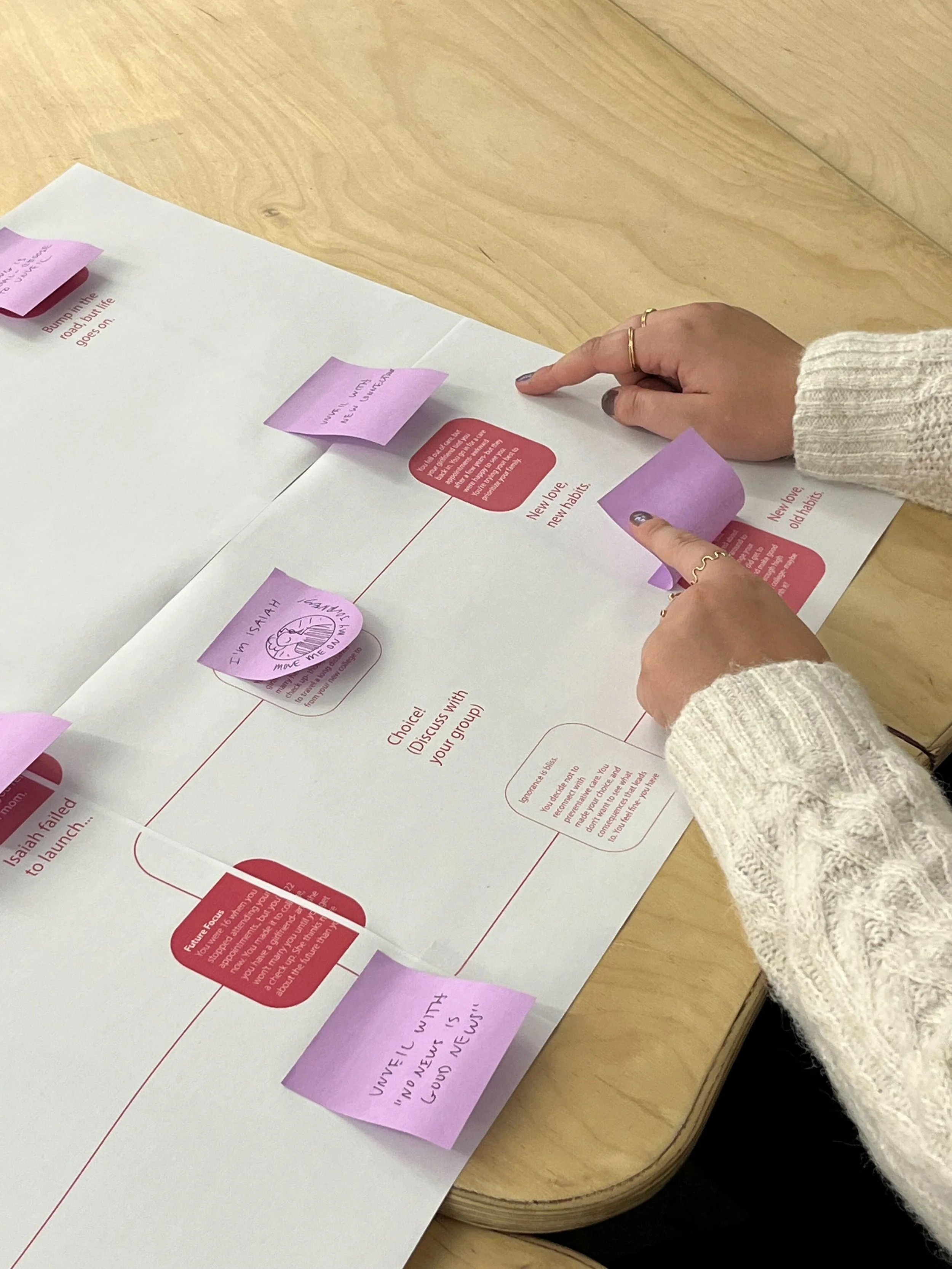
Our pilot workshop gave healthcare practitioners more tools to help their pediatric oncology patients, and paved the way for future HCD education.
SO WHAT?
My contributions to the development of workshop tools enabled the use of HCD tools for 7+ clinicians within Cincinnati Children’s Cancer and Blood Diseases Institute.
The development of new, interactive tools such as the Persona Journey Maps helped clinicians understand and empathize with patients on a longer time frame, rather than isolated to their occasional visits.